
Foundation for Global Political Exchange
Donate to The Exchange Foundation
Support free speech, open dialogue & scholarship access across Western Asia & North Africa
Foundation for Global Political Exchange
Support free speech, open dialogue & scholarship access across Western Asia & North Africa
On December 20, 2023, the Foundation for Global Political Exchange together with the Knight First Amendment Institute at Columbia University filed a lawsuit challenging the assertion by the Treasury Department’s Office of Foreign Assets Control (OFAC) that it can restrict American groups from organizing political discussions that include people whom the government has sanctioned. The complaint argues that OFAC’s position exceeds its statutory and regulatory authority and violates the First Amendment.
“Preventing an American organization from including disfavored speakers in political dialogue is a dangerous overreach by the government with enormous consequences for the global exchange of ideas. Americans have a right to engage with people and ideas from around the world, and the First Amendment protects their right to do so even when the government objects.”
— Alex Abdo, Litigation Director, Knight First Amendment Institute at Columbia UniversityThe Foundation for Global Political Exchange promotes professional and academic enrichment through convenings in the Middle East and North Africa called “Exchanges.” Each Exchange involves a series of small-group, immersive dialogues that allows participants from around the world to engage with and question key decision-makers from across the country’s political spectrum. Since 2008, more than 1,500 people have attended Exchanges, including journalists, academics, students, NGO practitioners, and government officials from 51 different countries.
The Foundation convened the 21st Beirut Exchange in January 2023, where 15 participants from around the world gathered to engage with about 35 prominent figures in Lebanon. In advance of that Exchange, the Foundation informed OFAC that it intended to include five Lebanese political figures— some of whom are members of Lebanon’s parliament—who are designated under a U.S. sanctions regime or members of a designated organization. Interpreting its authority broadly, OFAC prohibited the Foundation from including the speakers.
“We invited these prominent political figures to the 2023 Beirut Exchange because they are vital to understanding Lebanon’s complicated political landscape and its role in global affairs,” said Nicholas Noe, Director and Co-Founder of the Foundation for Global Political Exchange. “Hearing from key decision-makers across the ideological spectrum is critical to finding pathways toward a sustainable peace.
“The OFAC ruling in our case is not only a clear and unwarranted abridgment of fundamental constitutional rights, it is also grossly out of step with US regulations and without precedent in US case law,” said Joshua Andresen, Board member of the Exchange. “Preventing Americans from speaking with those who hold views with which we disagree is antithetical to the durable peace solutions we so desperately need.”
— Nicholas Noe & Joshua Andresen“Our complaint argues that OFAC’s decision to block the Foundation from including designated speakers in its Exchanges exceeds OFAC’s authority and violates the First Amendment by suppressing core political speech. If OFAC’s interpretation of its regulatory authority holds, it could have enormous consequences for public discourse. Under the agency’s interpretation, major media organizations would also be prohibited from publishing interviews with influential figures who are designated under U.S. sanctions law—which media organizations currently do routinely, particularly in their coverage of conflict regions.
“The government can’t be allowed to dictate which voices Americans are permitted to hear from on issues of global politics,” said Anna Diakun, staff attorney at the Knight Institute. “The First Amendment was meant to keep this kind of authority out of the government’s hands.”
— Anna Diakun, Staff Attorney, Knight First Amendment Institute at Columbia UniversityThe lawsuit asks the court to declare that OFAC’s actions are unlawful and to prohibit the agency from preventing the Foundation from hosting discussions with speakers of its choosing in the future.
• Your tax-deductible contribution to the Exchange Foundation will help support our effort to challenge the US Government’s unconstitutional restriction of our First Amendment freedoms of speech and association when it ruled that we cannot convene critical discussions with certain individuals.
Lawyers: Alex Abdo, Anna Diakun, Jameel Jaffer, Alexia Ramirez & Xiangnong Wang (Knight Institute); Joshua Andresen (The Exchange Foundation).
The Knight First Amendment Institute defends the freedoms of speech and the press through strategic litigation, research, and public education. knightcolumbia.org
Secure payment — tax-deductible for US taxpayers
In June 2008, only a few weeks after sustained violence across Lebanon led to a settlement known as the Doha Accords, we launched our first Beirut Exchange research conference. It was our belief at the time that Lebanon was in dire need of more direct and diversified understanding, especially for those who are studying the country, influencing public opinion and discourse, or shaping their own country’s foreign policies. Given the current situation that finds Lebanon slipping from international focus even as its citizenry is immiserated further by the day, this is — regrettably — more true than ever.
In the years following the first Exchange, we steadily expanded our efforts, hosting more than 50 different Exchanges, including in Tunisia, Iraq, Syria and Turkey as well as on Libya and Yemen. Going into our 14th year, over 1,200 people from 51 different countries have now attended an Exchange, with many alumni returning in later years to join sessions once (or several times) again. View the lineup of Speakers at the recently concluded 20th Beirut Exchange.
In 2020, in order to transparently organize and further professionalize our work, we were finally able to establish The Exchange as a US-registered not-for-profit, under the aegis of The Foundation for Global Political Exchange, with the mission of promoting professional and academic enrichment through a variety of small group, direct engagement conferences in Western Asia and North Africa.
Crucially — and since our beginning — all funding for the Exchange comes from only two sources: First, the participants who pay the participation fee and, second, scholarship recipients who benefit from individual, charitable contributions designed to broaden the social, political and geographic diversity of each Exchange table. As such, there is no government, commercial or non-profit support, an aspect that we believe provides a relatively independent platform for dialogue and understanding.
The Exchange Foundation is a New York State registered 501(c)3 charitable organization. Donations customarily support our Scholarship Fund for participants from around the world who will deepen the social, political and geographic diversity of the Exchange and who can demonstrate both financial need and a deep interest in the country where the Exchange takes place. All donations are tax-deductible for US taxpayers.
Since 2020 72 students — from China, Peru, Brazil, Pakistan, Mexico, South Africa, Tunisia, Libya, Yemen and Lebanon (to name only a few countries) — have benefitted from our Exchange scholarships, allowing them to listen to, learn from and question leading intellectuals, activists and politicians representing an array of different points of view in a specific country. Our scholarship recipients have also expanded our own understanding of how states in the region are perceived beyond North America and Europe, leading to changes in the themes we explore and the speakers we seek out.
Join us in building The Exchange over the coming months and years as we bring our unique learning approach to more people around the world!
Illuminating and life changing experience. I will recall the Exchange as one of the most authentic educational experiences of my life.

There could not exist a more thorough and intensive immersion into Lebanese history and politics than The Exchange.
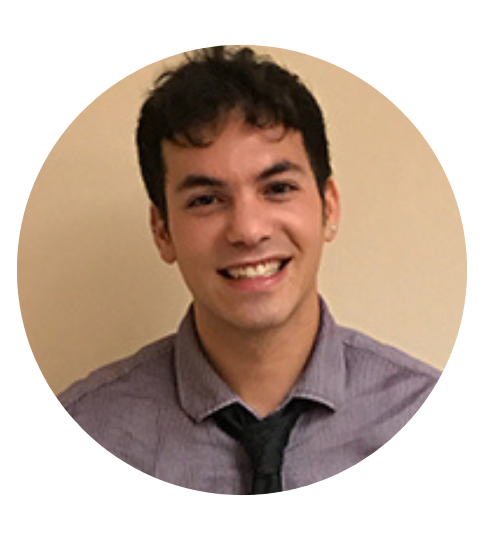
Time-tested technique and tactful diplomacy enables The Exchange to achieve an environment conducive to attention, dialogue and reflection.